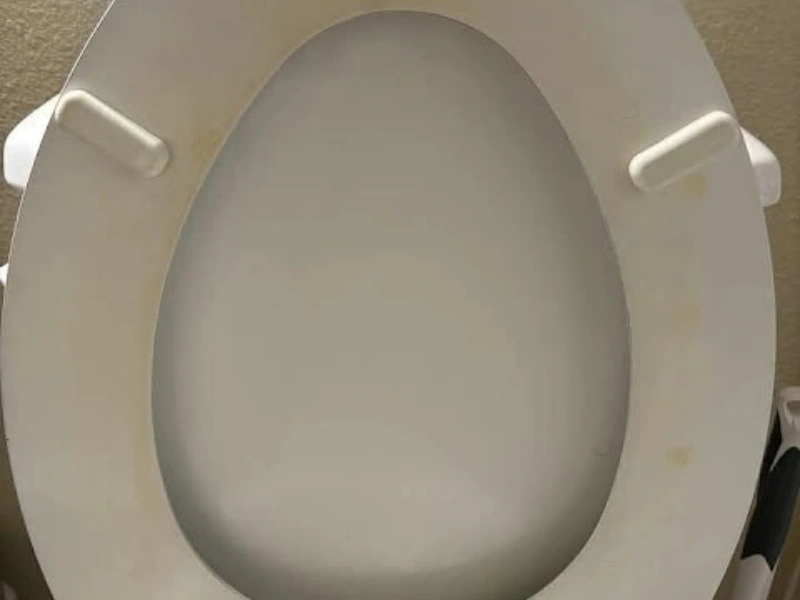
We’ve all seen it: that stubborn yellow or brown ring clinging just below the waterline in the toilet bowl. No matter how much you scrub with a regular brush, it refuses to budge—unsightly, unhygienic, and oddly persistent.
You’re not imagining it, and you’re definitely not alone.
The good news? It’s not permanent. And you probably already have everything you need to remove it—no harsh chemicals required. The secret is understanding what it actually is and using the right method (hint: brute force isn’t the answer).
🧪 What Actually Causes That Yellow or Brown Ring?
That ring isn’t just “dirt.” It’s usually a hardened buildup made of one or more of the following:
- Mineral deposits (limescale) from hard water—mainly calcium and magnesium
- Urine scale (uric acid crystals that bond tightly to porcelain over time)
- Iron or manganese in well water, causing rust-colored stains
- Mold or mildew in humid bathrooms (less common below the waterline)
These substances chemically bond to porcelain, especially if the toilet isn’t cleaned regularly. Once bonded, standard cleaners and brushes struggle to remove them.
✅ The Most Effective Non-Toxic Method (That Actually Works)
Step 1: White Vinegar + Baking Soda — Used Correctly
❌ Myth: Mix vinegar and baking soda together.
✅ Truth: They cancel each other out when mixed. Use them separately and in sequence.
Here’s the correct method:
- Lower the water level by flushing and holding the handle down, or remove some water with a cup.
- Pour 2 cups of white vinegar directly onto the stained area.
Let it sit for 30–60 minutes. Vinegar dissolves mineral deposits and uric acid. - Sprinkle baking soda over the stain.
It provides gentle abrasion and helps lift loosened buildup. - Scrub with a toilet brush. Use an old toothbrush for hard-to-reach areas under the rim.
- Flush to rinse clean.
💡 For stains above the waterline:
Soak paper towels in vinegar, press them onto the stain, and leave overnight. This keeps the vinegar in contact long enough to dissolve buildup.
🔥 For Extremely Stubborn Stains: Use a Pumice Stone (Safely)
A toilet-specific pumice stone is safe for porcelain when used correctly—and incredibly effective against mineral buildup.
How to use it safely:
- Wet the stone and the toilet bowl.
- Gently rub the stain in small circles.
- Rinse frequently.
⚠️ Important:
Never use a dry pumice stone—it will scratch porcelain. Always keep it wet.
🚫 What Doesn’t Work (or Makes It Worse)
- Bleach: Disinfects but does not dissolve mineral or urine scale—and can set stains.
- Scouring powders: Can scratch porcelain, making future stains stick faster.
- Harsh chemical lime removers: Often effective, but unnecessary if vinegar works—and much harsher on plumbing and air quality.
🛡️ How to Keep the Ring From Coming Back
- Clean weekly—prevent buildup before it hardens.
- Once a month: Add 1 cup of vinegar to the toilet tank (safe for plumbing) and let it sit overnight.
- Use tank tablets, not bowl tablets, and choose non-corrosive options.
- Hard water? Consider a water softener or commit to monthly deep cleaning.
Consistency is far more effective than aggressive chemicals.
❤️ The Bottom Line
That yellow ring isn’t a mystery—and it’s not a life sentence. It’s simply chemistry plus time. With vinegar, baking soda, and the right approach, you can restore your toilet to clean, bright porcelain without toxic fumes or damage.
“A clean toilet isn’t about perfection—it’s about consistency, smart tools, and not letting buildup win.” 🚽✨
So grab the vinegar, skip the bleach, and give your toilet the deep clean it actually needs. Your future self—and your guests—will thank you.