Over time, kitchen cabinets—especially those near the stove—collect a sticky film of grease, cooking oil, and food splatter. This residue traps odors, attracts dust, dulls finishes, and can eventually damage wood if left untreated.
The good news? You don’t need harsh chemicals. With a few common household ingredients, you can safely restore your cabinets to a clean, fresh-smelling finish.
🧼 Safe Cleaning Method (Wood, Painted & Laminate Cabinets)
What You’ll Need:
- Dish soap (grease-cutting, like Dawn)
- White vinegar (breaks down residue & neutralizes odors)
- Baking soda (for stubborn grime)
- Microfiber cloths or soft sponges
- Warm water
- Spray bottle
- Optional: Lemon or orange essential oil for freshness
⚠️ Always test cleaners in a hidden area first, especially on older or delicate cabinetry.
✅ 1. Everyday Grease Removal (Light Buildup)
Cleaning Solution:
- 2 tablespoons dish soap
- 2 cups warm water
How to Clean:
- Dip a microfiber cloth into the solution and wring it out well.
- Wipe cabinets gently, following the wood grain.
- Rinse the cloth frequently with clean water.
- Dry immediately with a soft towel to prevent streaks or water marks.
💡 Ideal for weekly maintenance.
✅ 2. Deep Cleaning for Sticky or Heavy Grease
Option A: Vinegar Spray
Mix:
- 1 part white vinegar
- 1 part warm water
- Lightly spray greasy areas.
- Let sit for 2–3 minutes.
- Wipe clean with a damp cloth.
- Dry thoroughly.
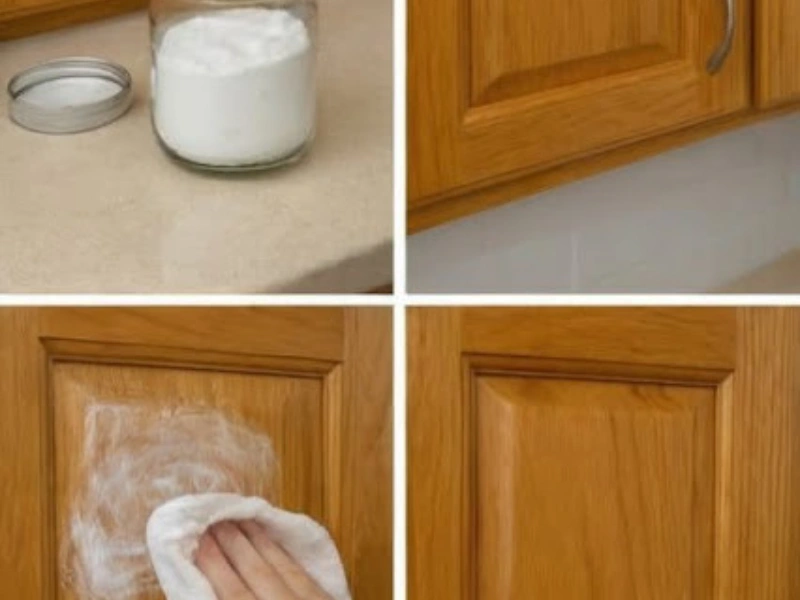
Option B: Baking Soda Paste
Mix:
- ½ cup baking soda
- ¼ cup dish soap
- 2 tablespoons water
- Apply paste to stubborn spots (handles, edges, corners).
- Gently scrub with a soft sponge.
- Wipe clean with a damp cloth.
- Buff dry with microfiber.
🌿 Baking soda lifts grime; vinegar dissolves grease and eliminates odors.
✅ 3. Remove Lingering Cooking Odors
Option A: Vinegar Mist
- Spray equal parts vinegar and water lightly inside cabinets.
- Let sit for 5 minutes, then wipe dry.
Option B: Baking Soda Absorbers
- Place small bowls or sachets of baking soda inside cabinets overnight.
Option C: Natural Freshener
- Mix 1 cup water with 10 drops lemon or orange essential oil.
- Lightly mist and wipe surfaces for a clean, food-safe scent.
🚫 What to Avoid
- Abrasive scrubbers or steel wool (scratches finishes)
- Undiluted bleach or ammonia (damaging and unsafe)
- Excess water (can warp wood and loosen veneer)
- Wax-based cleaners (attract future grease buildup)
🔁 Simple Prevention Tip
- Wipe cabinets weekly with a dry microfiber cloth.
- Always use your range hood or exhaust fan when cooking.
- Clean spills immediately—don’t let grease sit.
- Use a splatter screen when frying to reduce airborne oil.
❤️ The Bottom Line
Greasy cabinets don’t just look bad—they hold onto odors that affect your entire kitchen. With dish soap, vinegar, and baking soda, you can safely cut through buildup, eliminate smells, and protect your cabinetry without harsh chemicals or expensive products.
“A clean kitchen starts where we cook—and ends with peace of mind.”
Set aside an hour this weekend and give your cabinets the refresh they deserve. Your kitchen—and your guests—will notice 🍋✨