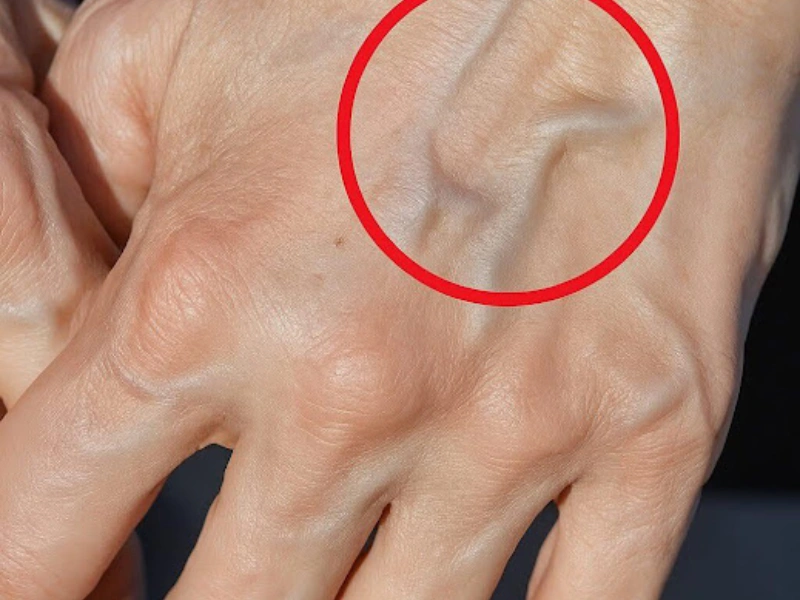
It’s normal for veins to become more noticeable with aging, exercise, warm weather, or weight loss.
But when veins appear suddenly, painfully, or in unusual places, it can feel alarming—and in some cases, it may signal an underlying medical issue.
Understanding the difference between harmless changes and warning signs can help you decide when to seek care.
Usually Harmless Causes of Visible Veins
1. Weight Loss or Low Body Fat
Less fat beneath the skin means less cushioning over veins, making them appear more prominent.
This is especially common in athletes or after rapid weight loss.
2. Heat or Warm Weather
Blood vessels naturally dilate in warm temperatures, increasing blood flow near the skin’s surface—so veins look more visible, particularly in the hands and arms.
3. Exercise or Increased Circulation
During workouts, muscles demand more oxygen, temporarily enlarging nearby veins.
These veins typically return to normal once you rest.
4. Aging Skin
As skin becomes thinner and less elastic with age, underlying veins are easier to see.
🟢 Generally not concerning if veins are:
- Soft and painless
- Flat rather than bulging
- Less visible when limbs are elevated
When Visible Veins May Signal a Problem
1. Varicose Veins (Most Common in Legs)
Appearance: Twisted, bulging blue or purple veins
Symptoms: Aching, heaviness, swelling, itching, or cramps
These result from faulty vein valves and can lead to complications like blood clots or skin ulcers if untreated.
See a doctor if symptoms worsen or become painful.
2. Superficial Thrombophlebitis
Appearance: A red, warm, tender cord beneath the skin
Cause: A clot in a surface vein
While often mild, it can occasionally extend into deeper veins.
Seek prompt medical evaluation.
3. Sudden Veins on the Chest, Neck, or Abdomen
This is uncommon and may relate to serious conditions such as:
- Blockage of major chest veins
- Liver disease causing abdominal collateral veins
- Heart-related circulation problems
Urgent warning signs include:
- Face or neck swelling
- Shortness of breath
- Abdominal swelling
Get medical care immediately if these occur.
4. Hard, Painful, or Persistent Veins
Veins that feel firm, tender, swollen, or warm, especially in one limb, may indicate deep vein thrombosis (DVT).
This requires urgent medical attention.
When to See a Doctor
Contact a healthcare professional if new vein changes come with:
- Pain, warmth, or tenderness
- Swelling in one arm or leg
- Skin discoloration (red, brown, or purple)
- Hard or cord-like veins
- Sudden appearance on the chest, neck, or abdomen
- Symptoms that don’t improve with elevation or rest
Early evaluation provides peace of mind and ensures timely treatment if needed.
The Bottom Line
Most visible veins are normal body variations, not a cause for concern.
But sudden, painful, or unusual vein changes deserve attention.
Your veins reflect your circulation—
and when that picture changes unexpectedly, it’s wise to look closer.
If you’re unsure, speaking with a healthcare professional is always the safest step.