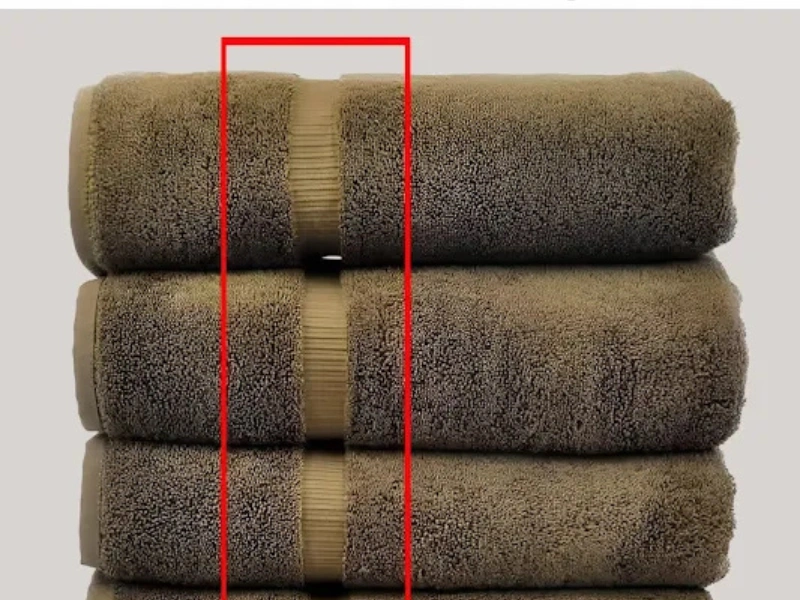
You’ve probably noticed them before—those subtle stripes or bands woven into the edges of your bath towels. Maybe you assumed they were just decorative… or maybe you never gave them much thought at all.
But those lines aren’t random. In many cases, they’re intentional design elements with specific purposes. Once you understand what they mean, you’ll start seeing your everyday towels a little differently.
Let’s take a closer look.
🧵 The Simple Truth
Most of the time, those lines are there for visual appeal. Manufacturers use them to add style, create variety, and make towels look more polished.
Common reasons include:
- Adding a decorative touch that fits bathroom décor
- Distinguishing between product collections
- Covering seams or reinforcing edges
- Following popular design trends
That said, not all towel lines are purely decorative—some actually serve a functional role.
🔍 Types of Towel Lines (and What They Mean)
1. Dobby Borders
These are the slightly textured bands near the edges of many towels.
What they do:
- Strengthen the towel’s edges
- Help prevent fraying over time
- Indicate a more thoughtful weaving process
They often appear on higher-quality towels and feel a bit raised when you touch them.
2. Decorative Stripes
Bold or colorful stripes running across the towel are usually just for style.
What they do:
- Enhance the overall look
- Help coordinate with bathroom sets
- Make it easier to tell towels apart
They don’t affect how the towel performs, though lower-quality dyes may fade faster.
3. Seam Lines
Some faint lines are actually seams rather than woven patterns.
What they do:
- Join pieces of fabric together (especially in large towels)
- Reduce material waste during production
You can often spot these by holding the towel up to the light.
4. Functional Zones (Less Common)
Certain premium towels include subtle pattern changes that serve a purpose.
What they do:
- Create areas for better drying or hanging
- Improve overall performance
These designs are more common in high-end or spa-style towels.
🏷️ Do More Lines Mean Better Quality?
Not really.
It’s easy to assume that more detail equals better quality, but towel performance depends on other factors entirely.
What actually matters:
- The type of cotton used (long fibers are softer and stronger)
- Fabric weight (GSM) for absorbency and comfort
- Loop density and weave quality
- Reinforced edges for durability
Stripes may enhance the look, but they’re not a reliable indicator of how good the towel is.
🧼 Keeping Your Towels in Great Shape
To maintain both appearance and performance:
- Wash towels before first use
- Avoid fabric softeners (they reduce absorbency)
- Use gentle drying settings
- Skip harsh bleach on colored designs
- Fold towels instead of hanging them by decorative edges
A simple habit like shaking towels before folding can also help keep them fluffy and neat.
❓ Common Questions
Do stripes affect absorbency?
No—absorbency depends on the fabric, not the design.
Why are stripes sometimes only on one side?
It’s usually a stylistic choice for how the towel looks when hung.
Can they be removed?
No, since they’re woven into the fabric.
❤️ Final Thoughts
Those lines on your towels might be decorative, structural, or occasionally functional—but they’re just one small detail in a bigger picture.
What truly matters is how the towel feels, how well it dries you, and how it fits into your daily routine. A great towel doesn’t need fancy stripes—it just needs to do its job well and feel comfortable every time you use it.
Still, it’s nice to know there’s a bit more thought behind those simple lines than you might have expected.