
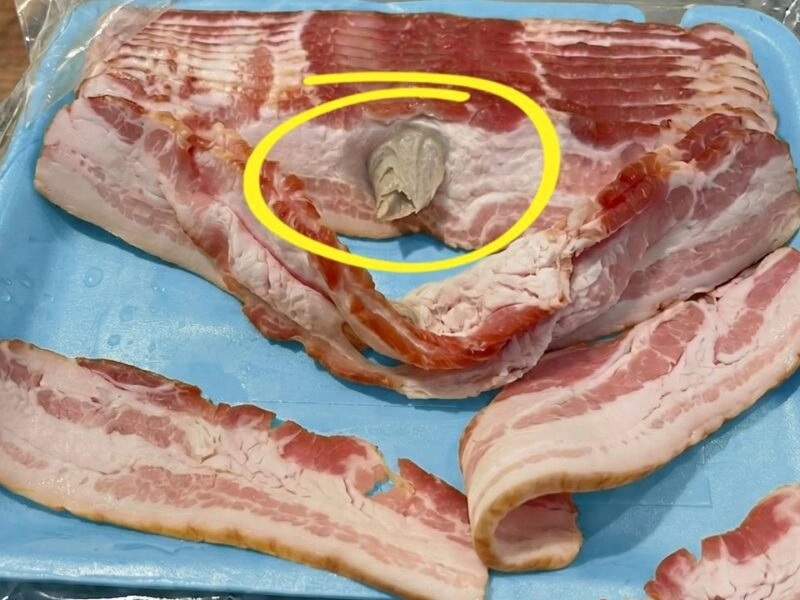
Finding an unusual lump or mass inside packaged bacon can be alarming, and while it may look shocking, food experts say the explanation is often related to problems during commercial meat production rather than something mysterious. According to veterinarians and meat science specialists, these growths are commonly identified as abscesses or cyst-like formations caused by injuries or injection sites that did not heal properly.
In large-scale livestock operations, animals routinely receive vaccinations and medications. Occasionally, an injection area may fail to absorb correctly, causing the surrounding tissue to trap fluid and form a pocket beneath the fat or muscle. During meat processing, these abnormal areas can remain hidden and accidentally make it through packaging and inspection.
Because industrial processing plants handle enormous quantities of meat at high speed, some defects can be missed — especially when they are concealed inside thick fatty sections. Discovering something like this in a package of bacon is unpleasant, but it also highlights the limitations of mass-production inspection systems.
What You Should Do If You Find Something Like This
Do Not Eat the Bacon
Even if the product is cooked thoroughly, consuming meat containing an abscess or abnormal growth is not recommended. These areas may contain bacteria, pus, or concentrated medication residue, which can contaminate surrounding meat.
Do Not Cut Around It
Removing only the visible section is not considered safe. Contamination can spread into nearby tissue even when it is not visible to the eye. For food safety reasons, the entire package should be discarded rather than partially salvaged.
Keep the Packaging and Report It
If possible, save the packaging, receipt, and product information. Reporting the issue helps manufacturers and retailers identify potential problems in processing or inspection.
You can contact:
- The grocery store where the bacon was purchased to request a refund or replacement
- The product manufacturer using the customer service information on the package
- Local food safety agencies if the issue appears serious or unresolved
Providing details such as the batch code, expiration date, and photos can assist with investigations and quality-control reviews.
Why Reporting Matters
Food manufacturers rely on consumer reports to detect issues that may slip through inspection systems. Reporting defects can help prevent similar products from reaching other customers and may trigger additional safety checks within the production chain.
While situations like this are uncommon, they are a reminder that consumers should always inspect packaged meat carefully before cooking or eating it.