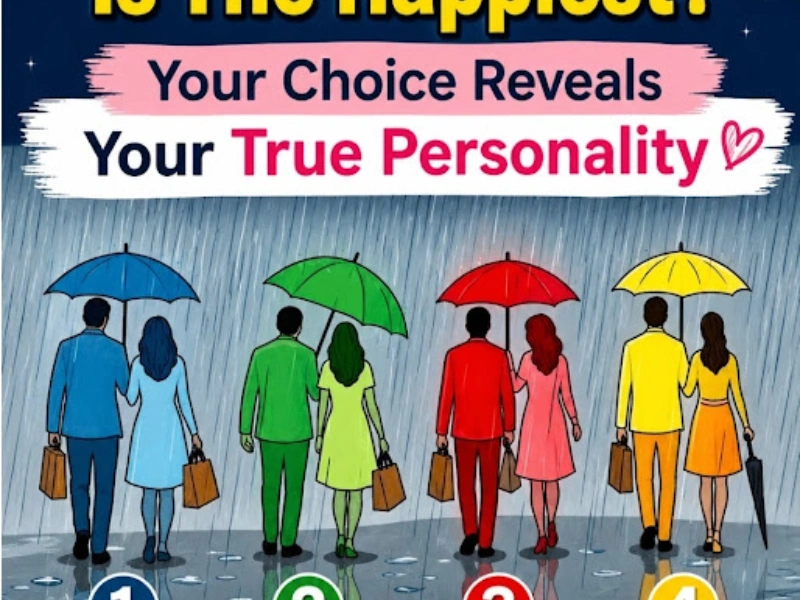
Images that ask you to choose the “happiest couple” and then promise to uncover your personality can seem surprisingly accurate. But in reality, these quizzes are more about entertainment and interpretation than genuine psychology.
What Your Brain Is Really Responding To
When you look at different couples in a picture, your mind instantly analyzes visual and emotional details such as:
- Smiles and facial expressions
- Eye contact and physical closeness
- Posture and body language
- Your own beliefs about love and relationships
- Past personal experiences
Because of this, your choice says more about how you perceive social situations in that moment than about your actual personality traits.
Why the Results Often Feel “Spot On”
These quizzes commonly use something called the Barnum Effect — a psychological tendency where people see vague, general statements as deeply personal.
That’s why the descriptions often sound believable:
- “You care deeply but protect your emotions.”
- “You value loyalty and emotional connection.”
- “You are thoughtful in relationships.”
Most people can identify with statements like these, which creates the illusion that the test understands them personally.
The Biggest Limitation
A single image choice cannot scientifically determine things like:
- Emotional intelligence
- Relationship compatibility
- Personality type
- Mental strength
- Romantic behavior
Real psychological assessments require detailed questions, patterns, and validated research — not just one visual decision.
What These Puzzles Actually Reflect
At most, these quizzes may reveal:
- What catches your attention visually
- How you interpret social interactions
- Personal assumptions about relationships
- Your current mood or emotional state
That’s very different from uncovering your “true personality.”
Why People Still Love Them
Despite lacking scientific accuracy, these puzzles remain popular because they are:
- Fun and easy to play
- Emotionally engaging
- Great conversation starters
- Interesting to compare with friends
- Designed to make simple choices feel meaningful
Humans naturally enjoy turning images into stories and searching for hidden meaning.
A Better Way to Think About Them
Instead of viewing these quizzes as real personality tests, it’s healthier to see them as:
- Casual entertainment
- Social icebreakers
- Observation games
- Fun reflections on perception and emotion
They can be enjoyable without needing to be scientifically true.
Final Thoughts
“Which couple is happiest?” quizzes don’t truly reveal who you are. What they really show is how your mind interprets emotions, body language, and relationships in a brief moment.
The interesting part isn’t the result itself — it’s how quickly we create stories and meaning from a simple image. 💑