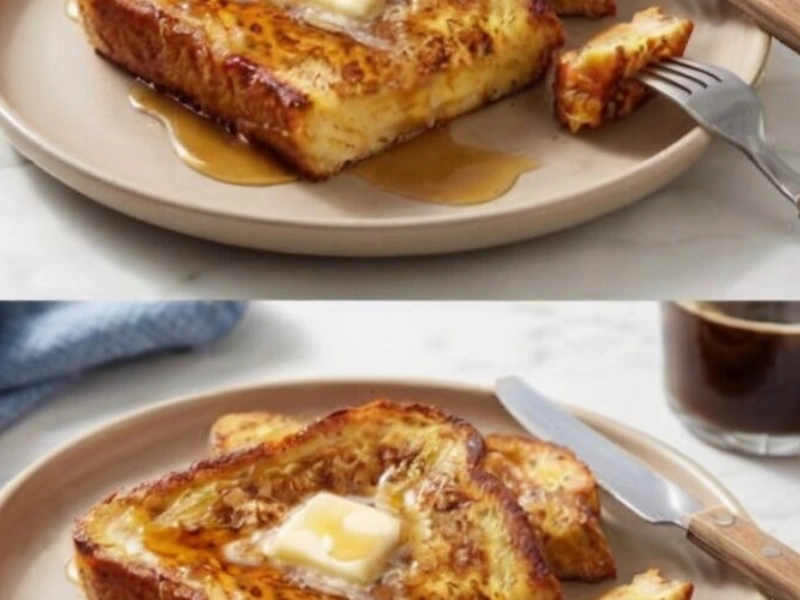
Crisp edges, custardy centers, and golden-brown perfection—every single time
There’s a reason French toast has endured through centuries of breakfasts, brunches, and sleepy Sunday mornings. It’s comfort and craft rolled into one: humble bread transformed by eggs, cream, heat, and patience into something deeply satisfying. When it’s done right, French toast feels indulgent yet familiar—crisp on the outside, meltingly soft inside, fragrant with vanilla and warm spice.
When it’s done wrong?
Soggy. Eggy. Forgettable.
This method fixes all of that. It’s not about fancy ingredients or chef-only tricks—it’s about intention. Choosing the right bread. Mixing a balanced custard. Soaking just long enough. Cooking low and slow so the inside sets before the outside browns too quickly. Master this approach, and French toast stops being “just breakfast” and becomes a dish people ask you to make again.
Why You’ll Love This Method
- Perfect texture every time — crisp outside, custardy center
- Balanced flavor — rich, lightly sweet, never eggy
- Easy to scale for one person or a crowd
- Uses simple pantry ingredients
- Impressive but comforting — ideal for brunch or holidays
- Beginner-friendly with foolproof steps
Ingredients
Serves 4 (8–10 slices)
French Toast Custard
- 5 large eggs, room temperature
- 1 cup (240 ml) half-and-half
- 2 tablespoons packed light brown sugar
- 1 teaspoon pure vanilla extract
- ½ teaspoon ground cinnamon
- ¼ teaspoon freshly grated nutmeg
- ¼ teaspoon fine sea salt
For Cooking
- 4–5 tablespoons unsalted butter (as needed)
- 2–3 teaspoons neutral oil (vegetable or avocado)
Bread
- 1 loaf brioche, challah, sourdough, or Texas toast
(sliced ¾-inch thick, preferably 1–2 days old)
Equipment Needed
- Large mixing bowl
- Whisk
- Fine-mesh strainer (optional but recommended)
- 9×13-inch baking dish (for soaking)
- Large nonstick or cast-iron skillet
- Thin spatula
- Wire rack and baking sheet
Step-by-Step Instructions
1. Prepare the Bread
Slice bread into uniform ¾-inch slices. Slightly stale bread is ideal—it absorbs custard without collapsing.
Using fresh bread?
Lay slices on a baking sheet and dry in a 300°F (150°C) oven for 10–12 minutes. Cool completely.
2. Make the Custard
In a large bowl, whisk eggs, half-and-half, brown sugar, vanilla, cinnamon, nutmeg, and salt for about 60 seconds, until completely smooth.
For ultra-silky French toast:
Strain the custard through a fine-mesh sieve into a shallow dish.
3. Soak the Bread (The 30-Second Rule)
Place 1–2 slices into the custard and press gently to submerge.
- Soak 30 seconds per side only
- Bread should feel heavy, not dripping
Transfer soaked slices to a wire rack to prevent steaming.
4. Cook Low and Slow
Heat a skillet over medium-low heat. Add 1 tablespoon butter and 1 teaspoon oil.
Once butter foams, add soaked bread:
- Cook 4–5 minutes until deeply golden
- Flip and cook 3–4 minutes until set through
Transfer to a wire rack. Wipe the pan clean between batches and repeat.
5. Serve Immediately
French toast is best straight from the skillet—hot, crisp, and custardy.
Pro Tips for Perfect French Toast
- Use half-and-half, not milk — fat creates custard structure
- Never oversoak — soggy French toast can’t be fixed
- Medium-low heat is essential for even cooking
- Rest cooked slices on a wire rack, not a plate
- Combine butter with oil to prevent burning
- Straining the custard delivers restaurant-level smoothness
Variations & Substitutions
- Dairy-Free: Full-fat coconut milk or almond milk
- Egg-Free: Mashed banana + plant milk custard
- Savory French Toast: Skip sugar and spices; add black pepper and herbs
- Pumpkin Spice: Add 2 tablespoons pumpkin purée + pumpkin spice
- Baked French Toast: Arrange soaked slices in a greased dish; bake at 375°F (190°C) for 25–30 minutes
Serving, Pairing & Storage
How to Serve
- Warm maple syrup and powdered sugar
- Fresh berries and whipped cream
- Nut butters or fruit compotes
Pairs Well With
- Crispy bacon or sausage
- Fresh fruit salad
- Coffee, chai, or fresh orange juice
Storage
- Refrigerate leftovers up to 3 days
- Reheat in a skillet or toaster oven for best texture
Freezing
- Freeze cooked slices up to 2 months
- Reheat straight from frozen in oven or toaster
Frequently Asked Questions
Why is my French toast soggy inside?
Over-soaking or cooking at too high heat.
Can I make the custard ahead of time?
Yes—up to 24 hours refrigerated. Whisk before using.
Best bread for beginners?
Texas toast. It’s sturdy and very forgiving.
Can I make this for a crowd?
Absolutely. Use two skillets or finish in the oven.
Why add sugar to the custard?
It enhances browning and flavor—not just sweetness.