
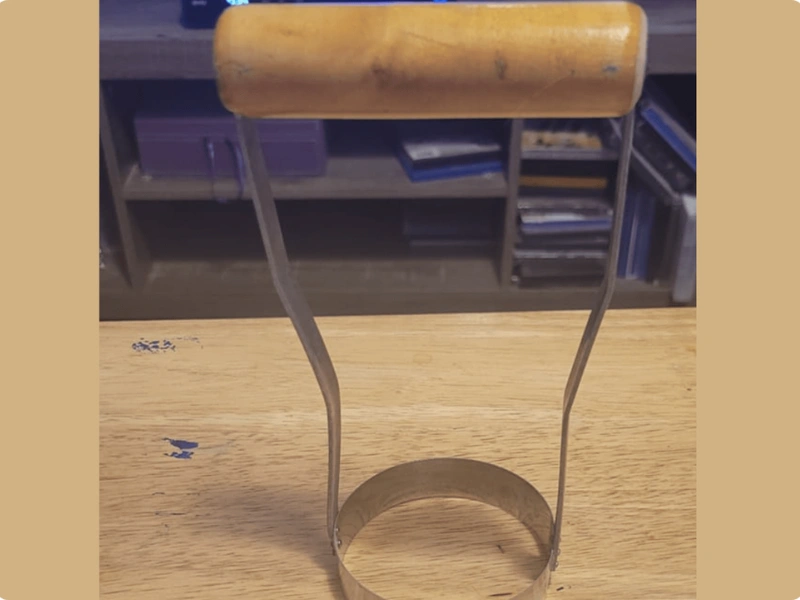
Tucked away in attics, displayed on vintage shelves, or still faithfully working in a handful of devoted kitchens, the Kwik-Kut Deluxe Food Chopper is more than an old kitchen gadget—it’s a symbol of early 20th-century ingenuity. First introduced to American households in the early 1900s, this hand-cranked marvel quickly earned its place as a kitchen essential, praised by homemakers for its simplicity, durability, and dependable performance.
Long before food processors whirred on countertops, the Kwik-Kut offered a clever mechanical answer to one of the most time-consuming kitchen tasks: chopping.
Purpose & Design: Simplicity with Intent
Built to make quick work of vegetables, fruits, nuts, and herbs, the Kwik-Kut Deluxe became especially popular for preparing ingredients for salads, relishes, and hearty home-cooked dishes—everything from fresh slaws to meatloaf mix-ins and grill-side salsas.
Its design was elegantly straightforward. A sturdy metal cylinder housed a sharp, rotating blade wheel. Users dropped food into the top, secured the lid, and turned the hand crank. With each rotation, the internal blades finely minced the contents into even, uniform pieces—no electricity, no noise, just pure mechanical precision.
Evolving with the Times
Like many beloved household tools, the Kwik-Kut evolved alongside changing kitchen trends:
- 1930s: Designers improved stability and ease of use by adding a wider base and longer handle, giving cooks better leverage and control.
- 1950s: Reflecting the era’s embrace of modern materials, newer versions featured slimmer profiles and colorful plastic handles—a mid-century update that preserved function while adding style.
These thoughtful refinements helped the Kwik-Kut remain relevant for decades.
The Quiet Fade from Modern Kitchens
Despite its reliability, the Kwik-Kut gradually disappeared from mainstream use. As high-speed blenders, electric food processors, and multi-function appliances took over, the humble hand-crank chopper slipped into obscurity—absent from advertisements, overlooked in stores, and replaced by gadgets that promised speed over simplicity.
But fading from store shelves is not the same as being forgotten.
A Legacy That Endures
In countless homes across America, the Kwik-Kut still lives on—not as a display piece, but as a working heirloom. Some families have passed the same chopper down through three or even four generations, its metal body worn smooth by decades of steady use. Others rediscover one in a grandparent’s cupboard and bring it out for special occasions, savoring the connection to slower, more intentional cooking.
Even when used only occasionally, the Kwik-Kut remains deeply cherished—a reminder of a time when kitchen tools were built to last and “convenience” meant smart design, not just electricity.
So if you ever spot one in an antique shop or tucked into a forgotten drawer, don’t dismiss it as outdated. See it for what it truly is: a quiet hero of domestic history—one that chopped, minced, and mixed its way into the heart of the American kitchen.