
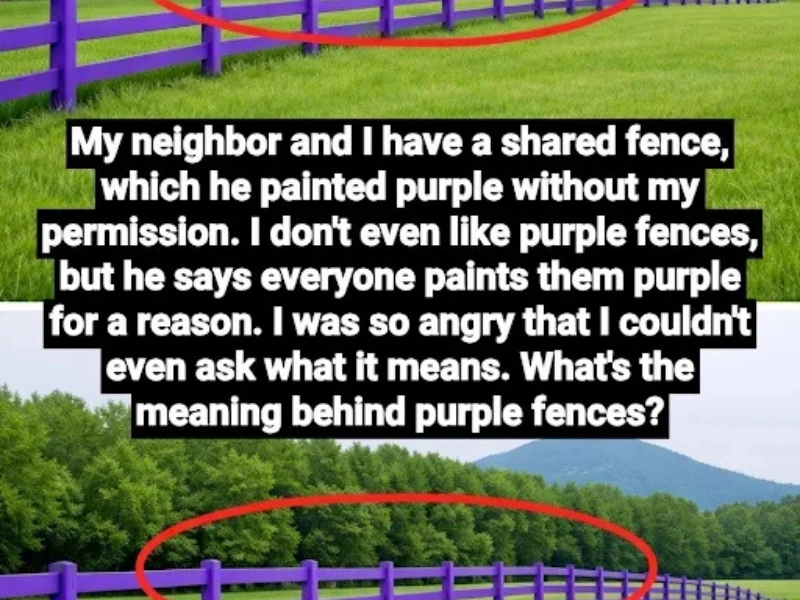
What Does Purple Paint on a Fence or Tree Mean? Here’s What You Should Know
Imagine you’re hiking through the countryside, driving along a rural road, or walking near a wooded property when you notice a bold purple stripe painted on a tree or fence post. It might seem random at first—but that splash of color carries an important message.
In many parts of the United States, purple paint is more than decoration. It’s a legal warning that marks private property and signals “No Trespassing.” Instead of relying only on signs that can fade, blow away, or get damaged, many landowners now use painted markings as a long-lasting way to protect their land.
If you’ve ever been curious about those purple marks—or you own property and are considering using them yourself—here’s a clear breakdown of what they mean, where the law applies, and why this unusual system exists.
🟣 The Meaning Behind Purple Paint
Purple paint markings are used in many states to indicate that entry onto the property is prohibited without permission. Legally, these markings often carry the same authority as a traditional “No Trespassing” sign.
Crossing beyond a properly marked boundary could result in trespassing violations, whether the activity involves hiking, hunting, fishing, or simply entering private land without approval.
Because the markings are recognized by law in many states, claiming you “didn’t know what it meant” usually won’t excuse a violation.
🗺️ States That Recognize Purple Paint Laws
As of 2026, more than twenty states officially allow paint markings to serve as legal no-trespassing notices. While purple is the most common color, some states use alternatives such as orange, blue, or yellow.
Examples include:
| State | Color Used |
|---|---|
| Texas | Purple |
| Florida | Purple |
| Tennessee | Purple |
| Illinois | Purple |
| Indiana | Purple |
| Missouri | Purple |
| South Carolina | Purple |
| West Virginia | Purple |
| Arizona | Orange |
| Idaho | Orange |
| Maryland | Blue |
| Nebraska | Blue or Red |
Some states have special limitations or regional exceptions, so checking local regulations is always wise before assuming the markings apply universally.
📏 Common Legal Requirements for the Paint Markings
The rules vary slightly from state to state, but most laws require the markings to follow a specific format in order to be enforceable.
Typical requirements include:
- A vertical paint stripe
- At least 1 inch wide
- Roughly 8 inches tall
- Positioned 3–5 feet above ground level
- Clearly visible to approaching visitors
- Spaced consistently along property boundaries
The paint can usually be applied to trees, fence posts, rocks, or other permanent structures.
For landowners, durable outdoor paint is recommended so the markings remain visible through changing weather conditions.
❓ Why Was Purple Chosen?
Purple may seem like an unusual choice, but it was selected for several practical reasons.
It stands out in nature
Purple contrasts strongly against trees, grass, dirt, and stone, making it easier to notice outdoors.
It works better for many colorblind individuals
Unlike red or green, purple is more distinguishable for people with common forms of color blindness.
It avoids confusion
Orange and yellow are frequently used for construction, forestry, or surveying. Purple is rarely used for other outdoor markings.
It lasts longer than signs
Paint doesn’t rip, rust, or blow away the way paper or metal signs sometimes do.
⚖️ What Happens If You Ignore Purple Paint?
Entering land marked with legal paint warnings can lead to consequences that range from minor fines to criminal charges, depending on the state and situation.
Possible penalties may include:
- Monetary fines
- Misdemeanor trespassing charges
- Increased penalties for hunting or damaging property
- Legal liability issues
Some states impose stricter punishments if the trespass involves weapons, livestock, or repeated offenses.
🚶 What To Do If You See Purple Paint
If you encounter purple markings while outdoors, the safest approach is simple:
1. Stop and evaluate
Check whether you may be approaching private property.
2. Look for additional notices
Many property owners use both paint markings and traditional signs.
3. Respect the boundary
If you’re uncertain whether access is allowed, it’s best to turn around.
4. Ask permission if needed
Hunters, hikers, and anglers should contact the landowner before crossing marked areas.
5. Learn your local laws
Regulations vary, especially regarding recreational land use.
🌲 Advice for Property Owners
If you own land and want to use paint markings, take time to understand your state’s exact rules before applying them.
Helpful tips include:
- Use weather-resistant paint
- Repaint faded markings regularly
- Keep marks visible and unobstructed
- Photograph and document your boundaries
- Combine paint with occasional signs for extra clarity
Maintaining visible markings helps avoid confusion and protects both visitors and property owners.
❓ Frequently Asked Questions
Does purple paint only prohibit hunting?
In most states, it warns against all unauthorized entry—not just hunting. However, some states apply the law mainly to hunting and fishing activities.
What if the paint is faded?
If markings are difficult to see, they may not meet legal standards. Property owners should maintain them regularly.
Can anyone use purple paint?
You can paint your fence or trees any color you want, but the markings only carry legal weight in states that officially recognize the law.
Why do some states use orange or blue instead?
Different states adopted different systems based on existing land-marking practices and visibility preferences.
Does this apply to rivers or lakes?
Usually, these laws apply to land boundaries rather than waterways. Water access rules can be different.
💙 Respecting Boundaries Benefits Everyone
Purple paint laws were designed to reduce misunderstandings and make property boundaries easier to recognize.
For landowners, they provide a simple and durable way to protect private land.
For hikers, hunters, and outdoor explorers, they offer a clear reminder to pause and respect someone else’s space.
At the end of the day, a little awareness goes a long way. Whether you’re enjoying the outdoors or protecting your property, understanding what those purple markings mean helps everyone avoid unnecessary conflict—and keeps outdoor spaces safer and more respectful for all.