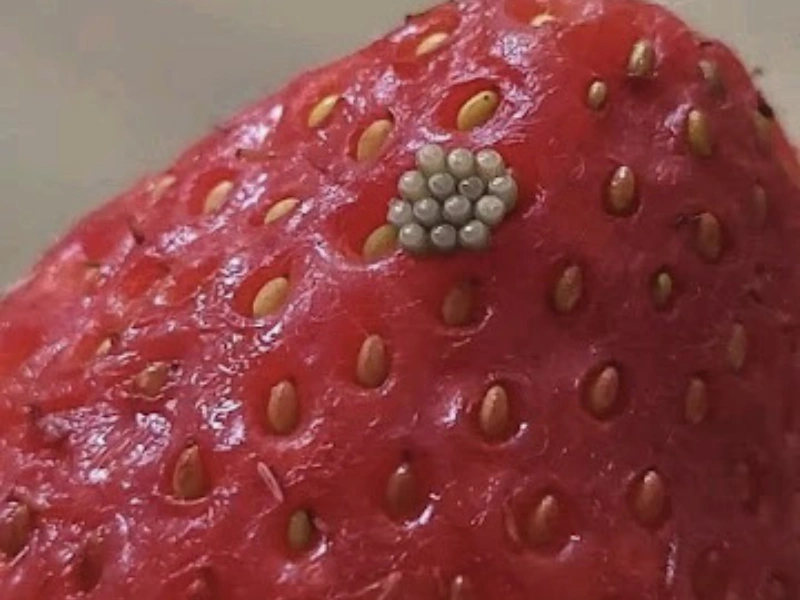
It can definitely catch you off guard, but it’s actually quite common: the tiny white “worms” you might notice after soaking strawberries in salt water are larvae from a small fruit fly known as the spotted wing drosophila. While the sight isn’t pleasant, the fruit itself is still safe to eat. Here’s a clearer look at what’s going on.
🐛 What are those tiny larvae?
These little creatures are the immature stage of the spotted wing drosophila, a type of fruit fly that lays its eggs in soft, ripening fruits—especially berries.
- The larvae are very small (about 1–3 mm), pale, and slightly wiggly
- They develop inside the fruit as it ripens
- They are not parasites and cannot live in or harm the human body
🧂 Why do they appear in salt water?
When strawberries are soaked in salt water, it creates an environment that draws moisture out of the larvae. This irritates them and causes them to come out of the fruit.
- The salt doesn’t create anything new—it simply reveals what’s already there
- Plain water is much less effective for this purpose
- A common method: mix 1 teaspoon of salt with 4 cups of water and soak for 10–15 minutes
✅ Is it safe if you eat them?
Yes, it is.
- These larvae are harmless and non-toxic
- Your digestive system breaks them down just like other proteins
- Food safety authorities confirm there’s no health risk
Of course, most people prefer to remove them for peace of mind, which is why soaking is helpful.
🍓 How to reduce the chances
A few simple habits can help you avoid or minimize encountering them:
When buying:
- Pick berries that are firm and dry
- Avoid overly soft, damaged, or leaking fruit
At home:
- Store strawberries unwashed in the fridge
- Wash or soak them only right before eating
- Keep them in a breathable container or a single layer
Optional cleaning:
- A vinegar rinse (water + vinegar) helps reduce bacteria and mold, but it doesn’t draw out larvae as effectively as salt water
❤️ Final note
Seeing larvae in fruit can feel unpleasant, but it often means the fruit hasn’t been heavily treated with pesticides—something many people value.
Nature isn’t perfectly clean, but it’s still safe. A quick soak, a rinse, and you can enjoy your strawberries without worry.