A snakebite can happen without warning. One moment you’re hiking a trail, cleaning out a shed, working in the yard, or gathering firewood, and the next you feel a sudden sharp pain. In those first few seconds, fear and confusion often take over.
Many people immediately wonder:
- Should I tie off the limb?
- Should I try to remove the venom?
- Should I drive myself to the hospital?
- Is the snake poisonous?
The truth is that most snakebites are survivable when handled correctly. Knowing a few important first-aid steps can dramatically improve the outcome and help prevent complications.
The most important thing is to stay calm, avoid dangerous myths, and get medical help as quickly as possible.
Understanding Venomous Snakes
You don’t need to become a snake expert, but recognizing common venomous snakes in your region can help emergency professionals provide the right treatment.
Common Venomous Snakes in North America
Pit Vipers
This group includes:
- Rattlesnakes
- Copperheads
- Cottonmouths (water moccasins)
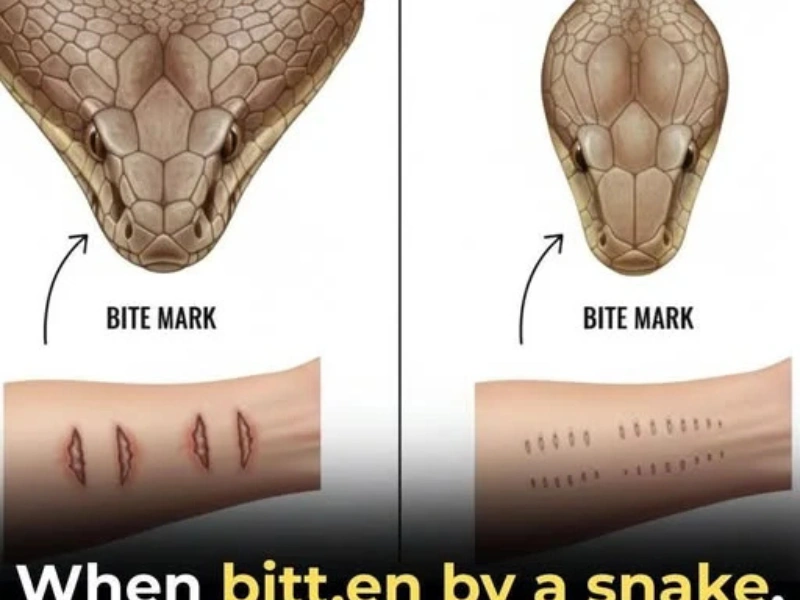
These snakes often have:
- Triangular-shaped heads
- Vertical slit-like pupils
- Heat-sensing pits between the eyes and nostrils
Coral Snakes
Coral snakes are less common but highly venomous. They are recognized by their bright red, yellow, and black banding patterns.
Important Safety Reminder
Never move closer to a snake for identification. If possible, take a photo from a safe distance, but do not risk another bite trying to capture or kill the animal.
What You Should Do After a Snakebite
1. Move Away from the Snake
Create distance immediately. Many secondary bites happen when people try to kill, move, or examine the snake after being bitten.
2. Call Emergency Services
Call emergency responders or arrange transportation to the nearest hospital as quickly as possible.
If you are the injured person, avoid driving yourself. Venom can cause dizziness, weakness, or loss of consciousness.
3. Stay as Calm as You Can
Fear increases heart rate, which may help venom move through the body more quickly.
Take slow breaths and focus on staying still. Most venomous snakebites are treatable with modern medical care.
4. Keep the Affected Limb Still
Limit movement as much as possible.
- Keep the bite area at or slightly below heart level
- Use a splint if available
- Avoid walking unnecessarily
Reducing movement can help slow venom circulation.
5. Remove Tight Items
Swelling may begin quickly. Remove:
- Rings
- Watches
- Bracelets
- Tight clothing or boots
before swelling becomes severe.
6. Monitor Swelling
If possible, use a pen or marker to outline the edge of swelling and note the time. This information can help doctors monitor progression.
7. Get Medical Treatment Immediately
Antivenom is the primary treatment for serious venomous bites. Early medical care improves outcomes and reduces the risk of complications.
Dangerous Snakebite Myths to Avoid
Movies and old survival stories have spread many unsafe ideas about snakebite treatment. Some of these methods can make injuries worse.
Do NOT Use a Tourniquet
Tourniquets can cut off blood flow and increase tissue damage. They are no longer recommended for snakebites.
Do NOT Cut the Wound
Cutting the bite site does not remove venom and increases the risk of infection and bleeding.
Do NOT Attempt to Suck Out Venom
This method is ineffective and can introduce bacteria into the wound.
Do NOT Apply Ice
Ice may worsen tissue injury and does not stop venom spread.
Do NOT Drink Alcohol or Excessive Caffeine
Alcohol and stimulants may affect circulation and heart rate.
Do NOT Attempt to Capture the Snake
Your priority is safety and treatment—not catching the animal.
Common Symptoms of Venomous Snakebites
Not every snakebite injects venom, but you should never assume a bite is harmless.
Local Symptoms
These may include:
- Immediate pain or burning
- Swelling
- Bruising or discoloration
- Bleeding around puncture marks
Whole-Body Symptoms
Some people may experience:
- Nausea or vomiting
- Dizziness
- Weakness
- Tingling sensations
- Blurred vision
- Difficulty breathing
Emergency Warning Signs
Seek immediate emergency care if you notice:
- Trouble breathing
- Rapid swelling
- Fainting
- Bleeding from gums or nose
- Severe weakness or confusion
What Happens at the Hospital?
Many people feel anxious about emergency treatment, but hospitals are well-prepared for snakebite cases.
Doctors may:
- Monitor your heart rate and blood pressure
- Perform blood tests
- Track swelling progression
- Administer antivenom if needed
- Observe you for several hours
Most patients recover fully, especially when treatment begins early.
How to Prevent Snakebites
Prevention is always safer than treatment.
Outdoors
- Watch where you place your hands and feet
- Avoid tall grass and brush when possible
- Wear boots and long pants in snake-prone areas
- Use flashlights at night
- Stay on clear trails while hiking
Around the Home
- Keep grass trimmed short
- Remove woodpiles and debris near the house
- Seal small openings around foundations
- Control rodents, which attract snakes
Snakebites and Pets
Dogs are especially vulnerable because they often investigate snakes out of curiosity.
Signs Your Pet May Have Been Bitten
- Sudden yelping
- Swelling around the face or legs
- Weakness
- Drooling or heavy panting
What To Do
- Keep the animal calm and still
- Carry them if possible
- Take them to a veterinarian immediately
Avoid home remedies or delaying treatment.
Frequently Asked Questions
Are Snakebites Usually Fatal?
Fatal snakebites are uncommon in countries with access to modern medical care. Quick treatment greatly improves survival rates.
How Quickly Should You Seek Help?
Immediately. Symptoms can worsen quickly, and early treatment is important.
Can Symptoms Appear Later?
Yes. Some reactions develop gradually over several hours.
Are Snakebite Kits Useful?
Most commercial suction kits are not considered effective. Basic first aid and rapid medical care are far more important.
Can People React to Antivenom?
Allergic reactions are possible, but medical teams are trained to manage them safely.
Final Thoughts
A snakebite is frightening, but panic and misinformation often make situations worse. The best response is simple:
- Move away from the snake
- Stay calm
- Keep the affected limb still
- Remove tight items
- Get medical help immediately
Avoid outdated remedies like cutting the wound, using tourniquets, or trying to suck out venom.
Preparedness and calm decision-making save lives. Understanding these basic steps can help you protect yourself, your family, and others during an emergency.
Whether you spend time hiking, camping, gardening, or simply living in areas where snakes are common, a little knowledge can make a big difference.